

The Evolving Landscape of Innovative Financing Instruments for New Technologies

Innovative financing tools and models have proved their efficiency in supporting the adoption and scale-up of emerging technologies. They have been instrumental in different regions, including the Asia-Pacific region, which stands at the forefront of technological innovation. Studies point to several persistent emerging technological constraints that include high upfront capital costs, perceived risks, and limited access to finance, all of which disproportionately hinder small and medium-sized enterprises (SMEs), start-ups, women-led enterprises, and grassroots innovators from translating promising technologies into tangible solutions. This article examines the evolving landscape of innovative financing instruments that can mobilise both public and private capital for emerging technologies across the region to overcome these barriers.
Drawing on recent developments and regional case studies, the analysis explores a diverse portfolio of financing mechanisms, like GSS+ (Green, Social, Sustainability and Sustainability-linked) bonds, Islamic finance, blended finance structures, public-private partnerships (PPPs), climate and innovation funds, venture capital, results-based financing, and carbon market instruments. By synthesising emerging best practices from across the Asia-Pacific, this article offers actionable insights for policymakers, financial institutions, development partners, and technology innovators seeking to bridge the financing gap and accelerate the region's transition toward a sustainable, technology-driven future.
- innovative financing
- emerging technologies
- green bonds
- SMEs
- climate finance
- technology transfer
1. Introduction
The Asia-Pacific region has emerged as a global powerhouse of technological innovation. From artificial intelligence (AI) and biotechnology to renewable energy and advanced manufacturing, the region’s economies are at the forefront of developing and deploying emerging technologies that promise to address pressing societal challenges, from climate change to healthcare access. Yet, despite this dynamism, there exist certain financing constraints that hinder the translation of promising innovations into tangible, scalable solutions (StemgenicGlobal, 2025).
This financing gap is not merely a matter of insufficient capital. Rather, it reflects a structural mismatch between the characteristics of emerging technologies: high upfront costs, long development timelines, uncertain returns, and perceived risks, and the risk-return profiles of traditional financing sources (International Finance Corporation, 2025). Commercial banks, conservative by nature, are often reluctant to lend to technology start-ups lacking collateral or operating histories. Venture capital, while vital for high-growth ventures, tends to concentrate in a few established innovation hubs and sectors, leaving many promising technologies and regions underserved.
The consequences of this gap are profound and unevenly distributed. Micro, small and medium-sized enterprises (MSMEs), which constitute over 90 per cent of businesses in the region and employ nearly 68 per cent of the workforce (ADB, 2025), are disproportionately affected. Women-led enterprises and MSMEs in rural, geographically remote and post-conflict areas face structural barriers, including limited access to collateral, networks, and financial literacy (United Nations Economic and Social Commission for Asia and the Pacific (UNESCAP), 2026). Grassroots innovators, often operating outside formal innovation systems, remain largely invisible to institutional financiers. As the Asia-Pacific region seeks to harness technology for sustainable development, closing this financing gap has become an urgent policy priority.
This article provides an overview of innovative financing models that have demonstrated efficacy in supporting emerging technologies across the Asia-Pacific region and in some countries outside the region. Previous literature on the topic has been scarce, with several studies that touch upon individual financial tools or country cases. To fill this gap, this contribution draws on recent developments, case studies, business media, and analytical reports on technology finance. The analysis covers a diverse portfolio of instruments, from green and sustainability-linked bonds to blended finance structures, results-based financing, and carbon market mechanisms. It also examines the enabling conditions, such as policy frameworks, institutional capacities, and regional cooperation mechanisms that determine the effectiveness of these instruments.
2. The Financing Landscape for Emerging Technologies in the Asia-Pacific
The financing needs for emerging technologies in the Asia-Pacific are immense and growing. The International Energy Agency (IEA) estimates that annual clean energy investment in emerging and developing economies must increase by more than seven times by 2030 to meet the climate goals (IEA, 2021). The Asian Development Bank (ADB) projects that infrastructure investment needs in the region will exceed US$1.7 trillion annually through 2030, much of it for technology-intensive projects. Yet current financing flows fall far short of these needs (ADB, 2023).
2.1 Barriers to deploying innovative financing tools
The gap is particularly acute for early-stage and growth-stage technology ventures. Geopolitical instability brings high financing costs, disrupted supply chains, and policy shifts, making large-scale, long-term projects harder to execute. However, in the Asia-Pacific region, this instability is accelerating a strategic pivot: long-term climate investment continues but is redirected toward traditional sectors and solutions that bring resilience: domestic energy security, industrial resilience, and self-sufficiency. International capital is expected to align with local policy priorities and does not enjoy the cross-border openness that was typical for international markets in the previous years. Across the Asia-Pacific region from China's national funds to India's incentives, Indonesia's resource nationalism, and Japan’s partnerships investors align with local frameworks to access strategic sectors. This approach ensures compliance but introduces trade-offs like reduced liquidity, governance constraints, and exit limitations (Cleantech Group, 2026).
Several interconnected barriers explain this financing gap (Figure 1). First, information asymmetries are pronounced in emerging technology sectors. Investors often lack the technical expertise to evaluate the potential of novel technologies, leading to underinvestment. Second, risk perceptions are elevated; emerging technologies face technological, market, regulatory, and execution risks that are difficult to price. Third, collateral constraints are binding; technology start-ups, particularly those with intangible assets, such as intellectual property, are often unable to provide the physical collateral required by traditional lenders. Fourth, market fragmentation across the region creates additional barriers. Divergent regulatory frameworks, currency risks, and limited cross-border investment programs constrain capital flows to promising technology ventures operating in several jurisdictions. Fifth, capacity constraints at the level of MSMEs and start-ups, such as limited financial management skills, weak governance structures, and a lack of investor readiness, further impede access to finance (StemgenicGlobal, 2025).
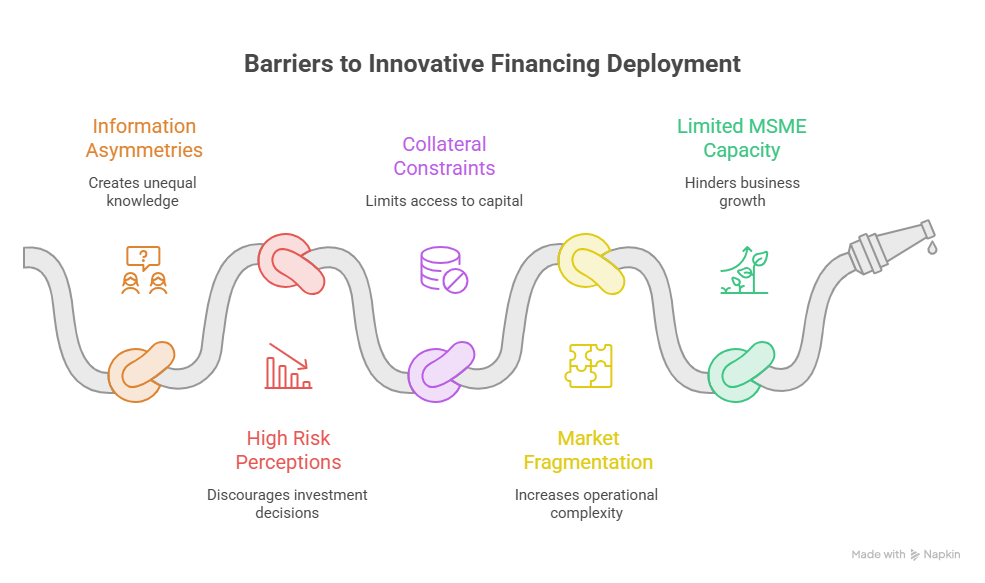
(Source: Author)
Addressing these barriers requires not only supportive public policies but also innovation in financing. Traditional financing instruments, designed for established firms with predictable cash flows and tangible assets, are not suitable for emerging technology ventures. Innovative financing models seek to address this mismatch by reallocating risks, mobilising new sources of capital, and aligning incentives among diverse stakeholders. Table 1 summarises innovative financing mechanisms applied by some of the global innovation leaders Israel, Germany, Finland, Saudi Arabia, the United Kingdom (UK), and the United States of America (USA). Each of the countries offers its approach (model), dominated by the private sector, public-private partnerships, or national budget earmarked funds.
Table 1. Innovative models and mechanisms to support emerging technologies
| Country | Primary Model | Key Mechanisms | Focus Areas |
|---|---|---|---|
| Israel | Public-Private Partnership | “Yozma” program (government matching funds with exit options), early-stage incubators, Law on Research and Development (reimbursable funds) | General Deep Tech, software, life sciences, cybersecurity |
| Germany | National Strategic Funds | “DeepTech & Climate Fonds” (DTCF), Kreditanstalt für Wiederaufbau (KfW) Bank (low-interest, long-term loans), “WIN Initiative”/ “Deutschlandfonds” | Deep Tech, climate tech, industrial scale-up, AI, quantum, semiconductors |
| Finland | Integrated Innovation & Export model | Business Finland (combines R&D funding and export promotion), global growth accelerators | Climate Tech, digitalisation (5G, IoT), industrial innovation |
| Saudi Arabia | Sovereign-led VC model | Public Investment Fund (PIF), Saudi Venture Capital (SVC), large-scale sovereign “backstop” funding | Fintech, E-commerce, AI infrastructure, cybersecurity |
| United Kingdom | Private-sector-driven model | Advanced Research + Invention Agency (ARIA) (high-risk tech research), Catapult centres (commercialisation), Living Labs, development finance (via British International Investment) | Climate Tech, advanced manufacturing, life sciences |
| United States | Private-sector-driven model | Advanced Research Projects Agency-Energy (ARPA-E) (high-risk energy tech), Energy Program for Innovation Clusters (EPIC), dominant private VC market | AI, biotech, semiconductors, energy, space, defense |
Source: Compiled by the author based on (KfW, 2025; ARPA-E, 2026; ARIA, 2026; BusinessFinland, 2026; DTCF, 2026; EPIC, 2026; Innovate UK, 2026; PIF, 2026; SVC, 2026; Yozma, 2026).
Israel's model is focused on using public funds to crowd in private investment. The cornerstone is the Yozma program established in 1993, where the government co-invested with private and foreign venture capital (VC) funds. The key innovation was that successful ventures could buy back the government’s stake at a discount, ensuring profits flowed to private partners. This strategy, supported by R&D grants and incubators, created a self-sustaining VC ecosystem.
Germany focused on overcoming the “valley of death” where proven technologies struggle to reach industrial scale. Through its development bank, KfW, and funds like the DeepTech & Climate Fonds, the government provides long-term, low-interest loans and venture debt. This patient capital is crucial for capital-intensive sectors like advanced manufacturing and green hydrogen, forming the core of Europe's strategy for technological sovereignty.
Business Finland offers an integrated approach following the “one-stop shop” model that combines R&D funding with export credits. For a small, open economy, the program aims to establish national champions that are globally competitive from the beginning. Its approach of linking technical development with global expansion has proven highly effective in helping start-ups scale up and enter international markets.
Under Vision 2030, Saudi Arabia has become a leading VC market by leveraging its sovereign Public Investment Fund (PIF). It manages a sizeable national capital (over US$910 billion in 2025) that reassures the market and attracts international players, even during turbulence in the global markets. According to its long-term strategy, the country aims at economic diversification, and the fund primarily focuses on driving this transformation while expanding its international footprint.
The UK and the USA rely primarily on the private sector for innovation, with the government playing a catalytic role in high-risk areas. The USA has the world’s deepest VC market and has established mission-oriented agencies, like ARPA-E, to fund emerging energy technologies that private investors tend to avoid. The UK combines a strong private market with government support for breakthrough research through the R&D funding agency ARIA and Catapult centres to commercialise it. The British International Investment (BII) also uses “flexible debt” in emerging markets to de-risk climate tech projects.
These models continue evolving to tackle existing and new challenges. Flexible debt and venture debt go beyond standard loans. Instruments with grace periods, local currency terms, and revenue-based repayments are emerging, pioneered by development finance institutions like the UK's BII. This aligns financing with the actual cash flow of capital-intensive ventures. Securitisation of certain technology areas of critical importance is assured through direct public investment: countries are making direct, large-scale “bets” on critical sectors like AI, quantum computing, and biotech to ensure they retain sovereign control and keep pace with the global leaders. For example, the £500 million Sovereign AI Fund was launched in the UK to support homegrown AI companies with capital, compute, and government procurement, while retaining intellectual property domestically (UK Government, 2026).
There is no single best model for funding emerging technologies and no one size fits all. Each country's approach reflects its national priorities, financial capabilities, and features of its national innovation ecosystem. Israel perfected a public co-investment to launch a private VC industry. Germany provides patient, large-scale capital for deep tech to industrialise. Finland established an entire value chain, linking R&D with export support. Saudi Arabia uses sovereign wealth as a powerful catalyst. The USA and the UK rely on a dynamic private market, while the targeted public funds are only used for high-risk areas. Additionally, different types of financing mechanisms target specific types of innovations: experimental, sustaining, efficiency-improving, and market-creating technologies (Hyung, 2018).
The remainder of this article examines specific innovative financing instruments and models that have gained traction in the Asia-Pacific region, drawing on evidence of their effectiveness and identifying conditions for success.
2.2. The variety of funding tools available in the Asia-Pacific
GSS+ bonds, blended finance, venture capital, private credit, results‑based financing, carbon market instruments, and Islamic finance tools are all suitable instruments for supporting emerging technologies. While these mechanisms have already been implemented individually in certain countries, it is important to examine how they can be combined within the Asia‑Pacific context to achieve maximum impact.
GSS+ Bonds: Scaling Capital for Green and Social Technologies
The first green, social, sustainability and sustainability-linked bonds (collectively known as GSS+ bonds) were issued by the European Investment Bank and the World Bank in 2007–2008. However, it was not until the entry of sovereign issuers (such as Poland and France) in late 2017 that GSS+ bonds began to emerge as a major source of financing for technologies with high environmental, climate and social significance (OECD, 2023). Japan, Republic of Korea, Hong Kong, and Australia together account for more than two-thirds of GSS+ instruments in the Asia-Pacific. Global GSS+ bond issuance reached record levels in 2024-2025, with the Asia-Pacific region showing particular dynamism. The region comes second (after Europe with US$430 billion) with slightly above US$110 billion from 383 bonds. The Asia-Pacific accounts for about 60 per cent of the total bonds and 55 per cent of the total volume of bonds contributed by low and middle-income issuers (Cadlas, 2026). In 2022, there was a decline in bond issuances due to geopolitical turbulence, market volatility and the rising interest rate. However, the market has quickly recovered in 2023, and the increasing trend was restored (London Stock Exchange Group (LSEG), 2023).
The growth of sustainable bond markets in Asia reflects both supply-side and demand-side factors. On the supply side, governments and development finance institutions have promoted GSS+ bonds as suitable tools for financing technology-intensive infrastructure and climate projects. On the demand side, institutional investors, including pension funds and insurance companies, have increasingly integrated environmental, social, and governance (ESG) criteria into their investment decisions. Although GSS+ bonds have become a significant part of sustainable finance in the Asia-Pacific, difficulties persist regarding transparency, credibility, pricing, and sustained impact (Moeljono & Maeda, 2025).
Green bonds remain the largest (around 64 per cent in 2025) segment of the GSS+ market (Climate Bonds Initiative, 2026), with proceeds specifically allocated to projects with positive environmental and climate impacts. In the Asia-Pacific region, green bonds have financed a wide range of climate technologies, including renewable energy installations, energy efficiency retrofits, sustainable transport, and water management systems. Studies show that investors in the region can accept lower returns when funding environmentally sustainable assets a trend not observed in Europe. The Asia-Pacific green bonds carry lower volatility and risk compared with conventional bonds. Additionally, financing costs for these bonds decrease when issued by financial institutions with investment-grade ratings in local currencies and with external certification (Wongaree et al., 2025).
A notable development is the emergence of transition bonds, a hybrid instrument that finances decarbonisation efforts in hard-to-abate sectors. Transition bonds are particularly relevant for the Asia-Pacific region, where fossil fuel-dependent industries are seeking to decarbonise while maintaining economic viability. Therefore, the region has evolved to be the largest global market for transition finance, as fast-growing economies face rapid industrial growth with simultaneous demand for net-zero emission targets (The Banker, 2023).
Over the past years, there has been a remarkable growth of social and sustainability bonds, whose cumulative volumes grew from zero to 14 per cent and 17 per cent, respectively (LSEG, 2023). These bonds can, at the same time, address social challenges and aim at long-lasting effects. Social bonds, which finance projects addressing social issues, have also gained traction in the region. In Japan, expressway companies have issued social bonds to finance projects related to regional revitalisation, disaster countermeasures, and traffic safety (Nippon Expressway Company (NEXCO), 2024). Sustainability bonds, which combine green and social objectives, are increasingly used to finance technology projects that deliver both environmental and social benefits.
Sustainability-linked bonds (SLBs) differ from use-of-proceeds bonds in that the issuer commits to achieving predefined sustainability performance targets (SPTs). Failure to meet these targets results in a penalty, typically an increase in the bond’s coupon rate. SLBs have faced some investor resistance due to concerns about target rigor and the risk of greenwashing. However, they remain an important instrument for financing the transition of carbon-intensive industries. These bonds were first issued in the Asia-Pacific in late 2020 and, since then, have held around 3 per cent of market share (LSEG, 2023).
The Association of Southeast Asian Nations (ASEAN) Capital Markets Forum (ACMF) has played a catalytic role in developing regional standards for GSS+ bonds. The ASEAN Green Bond Standards (ACMF, 2019a), Social Bond Standards (ACMF, 2019b), and Sustainability Bond Standards (ACMF, 2019c) provide a common framework for issuers across the region, reducing fragmentation and enhancing investor confidence. Brunei Darussalam, Cambodia, Lao PDR, Malaysia, Philippines, Singapore, Thailand and Viet Nam, for example, have adopted these standards, requiring that ASEAN GSS+ bonds comply with ACMF requirements (ACMF, 2018).
Blended Finance: De-risking Technology Investment
Blended finance is the strategic use of catalytic public or philanthropic capital to mobilise private investment. It has emerged as a powerful tool for financing emerging technologies in the Asia-Pacific. By absorbing early losses, providing guarantees, or offering concessional terms, blended finance structures reduce the risk-adjusted return thresholds for private investors, enabling them to invest in technologies and markets they would otherwise avoid (United Nations Educational, Scientific and Cultural Organisation (UNESCO), 2025).
The rationale for blended finance is particularly compelling in the context of emerging technologies. Many climate and social technologies are capital-intensive, have long payback periods, and face regulatory and market uncertainties. Private investors, seeking market-rate returns with acceptable risk, are often unwilling to bear these risks alone. Blended finance bridges this gap by aligning the risk-return profiles of different investor classes. For example, Asia Climate Solutions Design Grants support blended finance solutions targeting clean energy transition and the blue economy across South and Southeast Asia (Convergence, 2026).
Several blended finance structures have been deployed in the Asia-Pacific. First-loss guarantees, where a development finance institution or philanthropic organisation agrees to absorb initial losses, have been used to mobilise private capital for renewable energy and energy efficiency projects (UNESCO, 2025). Mezzanine funds, which occupy the risk-return space between senior debt and equity, have financed technology scale-ups in sectors such as agritech and cleantech (Li & Ban, 2025).
Co-investment vehicles, where public and private investors invest alongside each other, have been used to finance technology infrastructure projects. For instance, the World Bank Group and regional multilateral development banks, at the request of the G8 and G20 nations, have established the Clean Technology Fund (CTF) and the Strategic Climate Fund (SCF), which focus on low-carbon technologies and promote climate-resilient solutions in 25 Asia-Pacific developing countries since 2009. Among the CTF-supported programs are the Scaling-Up Renewable Energy in Low-Income Countries Program and Industry Decarbonisation Program, along with many others that provide ample space for emerging technologies (ADB, 2026).
Viet Nam offers a compelling case study of blended finance in action. Between 2015 and 2023, 49 climate tech start-ups in Viet Nam secured US$92.6 million in cumulative financing, with funding increasing 365 per cent year-on-year from 2021 to 2023 (New Energy Nexus, 2024). This growth has been supported by a combination of venture capital, development finance, and blended structures. This funding has been instrumental in empowering climate tech founders in Viet Nam to scale commercially, achieve investment readiness, and successfully secure both domestic and global venture capital funding.
In 2025, Alternō, a climate-tech start-up founded in 2023, presented its novel sustainable heat technology aimed at eliminating 100 million tonnes of CO₂ emissions annually by 2030. The start-up has closed its Series A round led by UntroD Capital Asia, with participation from ADB Ventures. The capital is accelerating manufacturing capacity and supporting R&D for advanced electricity storage solutions. Solar cleantech provider Stride secured Series A funding from United Overseas Bank (UOB) Venture Management, Clime Capital, and Touchstone Partners, enabling it to scale rooftop solar adoption through technology-driven customer experiences and innovative financing models (PR Newswire, 2025).
Venture Capital and Private Credit: Tailored Solutions for High-Growth Firms
Venture capital (VC) remains the primary source of equity financing for high-growth technology start-ups. In the Asia-Pacific, VC investment has grown substantially, with climate tech and deep tech emerging as prominent segments. However, the geography of VC investment remains uneven, concentrated in established innovation hubs, such as Beijing, Shanghai, Singapore, Bangalore, and Sydney. VC investment in climate tech has been particularly robust. The Asia-Pacific cleantech landscape is at an inflection point, with private capital increasingly asked to play a dual role: deliver near-term commercial returns and seed the structural ecosystem changes that underpin long-term value (Vandenberg et al., 2020).
While VC serves early-stage, high-growth ventures, a substantial financing gap persists for more mature MSMEs that have outgrown microfinance but remain underserved by commercial banks. This “missing middle” is particularly acute in ASEAN, where MSMEs account for the bulk of private-sector employment but often lack the collateral and formal financial records required for bank lending (GenCap, 2025).
Private credit is a bespoke form of lending outside traditional banking, as it offers a complementary solution. Unlike algorithmic lending, private credit allows for tailored structures that align with cash flows, sector dynamics, and business cycles. In ASEAN, however, private credit remains nascent. Beacon Fund, a private debt fund focused on Viet Nam, illustrates the potential: a renewable energy company in its portfolio, despite stable cash flows and long-term contracts, struggled to secure bank financing due to rigid collateral requirements. A customised private credit structure bridged the gap (Beacon Fund, 2024; Viet Nam Investment Review, 2024).
Digital finance has expanded access to capital for smaller technology ventures. Fintechs, digital wallets, and embedded finance platforms use real-time transaction data to assess creditworthiness, reducing friction and enabling faster loan disbursement. Initiatives such as Mastercard Strive, which supports digital and financial inclusion across ASEAN, demonstrate the potential of these tools to reach underserved SMEs, particularly women-led and informal businesses (World Economic Forum (WEF), 2025). However, digital access alone is insufficient. Many MSMEs, particularly in manufacturing, education, and healthcare, lack continuous digital records and remain invisible to algorithmic lenders. A connected financing ecosystem combining digital innovation, traditional banking, and alternative credit is needed to serve the full spectrum of SME financing needs (Chibueze, 2021).
Results-Based Financing: Focusing on Market Delivery
Results-based financing (RBF) ties disbursements to the achievement of predefined, independently verified milestones, aligning incentives and improving accountability. In the technology context, RBF has been used to finance innovation in sectors such as healthcare, education, and clean energy. This shifts performance risk to the private sector, de-risks investments, and attracts commercial capital to capital-intensive innovation. The ImpactCollab Outcomes Marketplace, launched at the Asian Venture Philanthropy Network (AVPN) Global Conference 2025 in Hong Kong, aims to shift funding in Asia from activities to verified outcomes (ImpactCollab, 2025). The platform ties its funding to impactful results in order to incentivise performance, transparency, and competition among service providers, including technology innovators (Li, 2025).
Carbon Market Instruments: Critical Supplementary Revenue for Climate Technologies
Carbon market instruments, such as carbon credits, represent a growing source of financing for climate technologies. A carbon credit represents one tonne of carbon dioxide or its equivalent that is either avoided or removed from the atmosphere. Projects that generate credits range from reforestation and renewable energy to direct air capture and can sell credits to corporates seeking to offset emissions (The World Bank, 2025). In Asia, Hong Kong Exchanges and Clearing’s (HKEX) Core Climate platform, launched in 2022, provides a transparent, integrated carbon marketplace for trading and settling carbon credits. The platform reduces counterparty risk and improves transaction efficiency, supporting the development of voluntary carbon markets in the region (HKEX, 2022; Mayer Brown, 2022; Climate Finance Asia, 2025).
For technology innovators, carbon credits can provide an additional revenue stream, improve project economics, and attract investment. However, this market is becoming increasingly competitive, and integrity remains a key advantage. To address this concern, the Integrity Council for the Voluntary Carbon Market’s Core Carbon Principles provides a framework for assessing credit quality, ensuring that credits represent genuine, additional, and verifiable emission reductions (Morgan Stanley Capital International, 2023; The Integrity Council, 2026).
Islamic Finance: Shari’ah-compliant Instruments for Digital and Sustainable Technologies
Islamic finance, a rapidly growing segment of the global financial system, offers another avenue for financing emerging technologies in the Asia-Pacific. Islamic finance principles, which prohibit interest (riba), speculation (gharar), and investment in prohibited activities (haram), align closely with the values underpinning sustainable development. By 2026, Islamic finance assets have reached US$4.93 trillion, of which Islamic fintech constitutes US$179 billion. The novel digital technologies, including AI, blockchain, and big data analytics, can benefit from investments at lower cost through Shari’ah-compliant finance tools (financial products and services structured to operate according to Islamic law Shari'ah). For example, blockchain-based smart sukuk can be provided within days, lowering costs up to 33 per cent and increasing fund accessibility. Smart waqf models require less paperwork and provide access to charitable funding that may be used for social investment. Some countries in the Asia-Pacific, like Saudi Arabia, have already emerged as global leaders in the Islamic finance market and are driving fintech innovation (Sidra Capital, 2026).
Sukuk (Islamic bonds) have been used to finance infrastructure and technology projects across the region. Malaysia, Indonesia, and Brunei Darussalam have developed robust Islamic finance ecosystems, with regulatory frameworks that accommodate GSS+ sukuk. The Brunei Darussalam Central Bank, for example, permits the issuance of sukuk designated as ASEAN GSS+ bonds, provided they comply with ACMF standards (ACMF, 2022). Islamic finance can mobilise capital from faith-based investors who might otherwise be excluded from technology financing.
3. Enabling Regulatory Frameworks and Policy Recommendations
Government policies play a critical role in creating and enabling conditions for innovative technology finance. The main government actions include the correct identification and application of a range of policy tools:
- Tax incentives for investments in emerging technologies, such as accelerated depreciation, investment tax credits, and reduced capital gains taxes.
- Credit enhancement mechanisms, including loan guarantees, first-loss provisions, and co-investment funds, that reduce private investor risk.
- Regulatory sandboxes that allow technology innovators to test new products and business models without being subject to full regulatory requirements.
- Public procurement of innovative technologies, creating demand and reducing market uncertainty.
Based on these findings, several recommendations for policymakers may be drawn. First, it is essential to develop national technology finance strategies that map financing needs across technology lifecycles and identify specific instruments to address gaps. In addition, efforts should be made to establish or strengthen enabling frameworks for GSS+ bonds, including alignment with ASEAN and international standards. Public, philanthropic, or private funds alone cannot address all challenges: blended finance is the best approach to target priority technology sectors.
Second, unequal access to finance could exclude certain inventors and their prospective technologies from the market. The solution would be to promote digital financial inclusion to expand access to finance for smaller technology ventures, including women-led and informal enterprises. Regular information campaigns also work well to keep technology innovators in the loop on existing opportunities.
Third, some technologies are economically viable only with economies of scale. In many instances, domestic demand is not sufficient for fast-growing technology firms, while the fragmentation of financial markets across the Asia-Pacific constrains cross-border technology finance. Supporting regional cooperation to reduce market fragmentation and facilitate cross-border technology finance is a way to support gazelles and unicorn companies. The ASEAN Capital Markets Forum has developed mutual recognition arrangements for bond offerings, including GSS+ bonds, reducing the cost and complexity of cross-border issuance. The ASEAN+3 Bond Market Forum has promoted harmonisation of bond market regulations across the region.
In addition to policy recommendations, several suggestions can be made for financial institutions and investors. For financial institutions specialists, it is necessary to build technical capacity to evaluate emerging technology investments, including developing sector-specific expertise. Further, investors seeking to support non-mainstream innovations need to develop innovative financing products tailored to technology MSMEs, including revenue-based financing, royalty financing, and intellectual property-backed lending. Additionally, financial specialists must integrate impact measurement into investment processes, using standardised frameworks and third-party verification. This will lower the investment risks and streamline the process, making it transparent for technology innovators.
Technology innovators, in turn, are advised to improve investor readiness by strengthening financial management, governance, and impact measurement capabilities. They can explore diverse financing sources, including GSS+ bonds, blended finance, and carbon markets, alongside traditional venture capital and bank lending.
4. Conclusion
This analysis has examined the landscape of innovative financing models for emerging technologies in the Asia-Pacific. Several key findings emerged. First, no single model suffices. The diversity of emerging technologies that range from AI to biotech to clean energy requires a portfolio of financing instruments tailored to different technology stages, sectors, and risk profiles. GSS+ bonds suit capital-intensive, de-risked technologies; venture capital suits high-growth start-ups; private credit suits established SMEs; and blended finance suits early-stage, high-impact innovations.
Second, context matters. The effectiveness of financing models depends on enabling conditions: robust legal and regulatory frameworks, institutional capacity, market infrastructure, and investor readiness. What works in Singapore may not work in Myanmar; what works for renewable energy may not work for biotechnology.
Third, cooperation is essential. The fragmentation of financial markets across the Asia-Pacific is a major constraint on technology finance. Regional cooperation, including harmonising standards, mutual recognition arrangements, and cross-border investment vehicles, can unlock significant capital flows.
Fourth, impact measurement matters. As sustainable finance grows, so does the risk of greenwashing. Robust, transparent, and verifiable impact measurement frameworks are essential to maintaining investor confidence and ensuring that financing achieves genuine environmental and social outcomes.
5. Acknowledgement
Support from the Basic Research Program of the National Research University Higher School of Economics is gratefully acknowledged (HSE-BR-2025-015).
References · 54 citations
How to cite
Liliana N. Proskuryakova (2026). “The Evolving Landscape of Innovative Financing Instruments for New Technologies.” Asia-Pacific Tech Monitor, Vol. 43, No. 2.
Technology offer
Interested in this technology?
Request further information or explore potential cooperation with the technology provider.
Technology request
Can you help meet this technology need?
Share a relevant technology, expertise or partnership opportunity with APCTT.